

Some of the links in this post are affiliate links. This means if you click on the link & purchase the item, I will receive an affiliate commission at no extra cost to you. All opinions remain my own.
If you’re new to dog ownership, you might have heard about exercise for dogs, but mental stimulation is just as important. Mental stimulation for dogs means giving them activities that challenge their mind and keep them busy.
Dogs who get both physical and mental exercise are happier, calmer, and less likely to get into trouble. In this post, you’ll learn what mental stimulation is and 10 easy ways to provide it for your dog.
Table of Contents
Signs Your Dog Needs Mental Stimulation
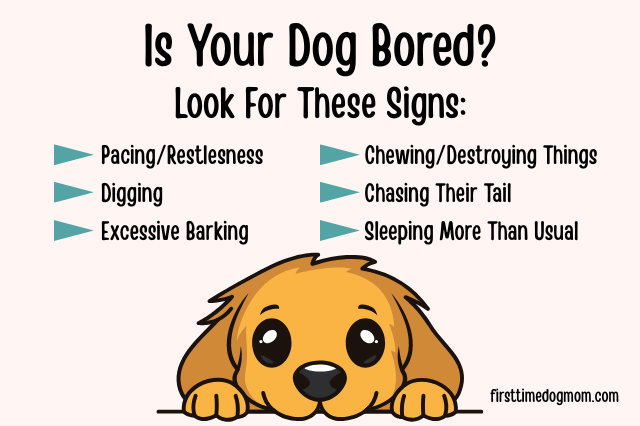
Even if your dog gets plenty of exercise, boredom can still cause problems. Watch for these common signs that your dog needs more mental challenges:
- Pacing or Restlessness: Your dog moves around a lot and can’t settle, even after exercise.
- Digging: Frequent digging in the yard can be a sign of boredom.
- Excessive Barking: Barking at everything or more than usual often indicates a lack of mental engagement.
- Chewing or Destroying Things: Furniture, shoes, or other items may get chewed out of boredom.
- Tail Chasing or Obsessive Behaviours: Repetitive actions like tail chasing show your dog needs a mental outlet.
- Sleeping More Than Usual: While dogs sleep a lot, excessive napping can signal boredom rather than rest.
10 Easy Ways To Stimulate Your Dog’s Mind
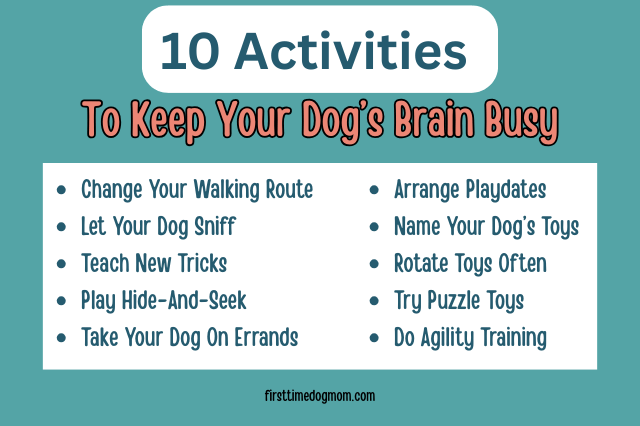
Providing mental stimulation doesn’t have to be complicated. These 10 simple activities can keep your dog’s mind active and engaged every day.
1. Change Up Walking Routes
Take different streets, parks, or trails to give your dog new sights and smells. Even a small detour around the block can make walks more interesting.
2. Let Your Dog Sniff On Walks
Walking your dog is great for physical exercise, but letting them sniff adds valuable mental stimulation. Allow your dog to explore the world with their nose. Sniffing is how dogs understand their environment. According to the American Kennel Club, scent walks provide important mental enrichment that can tire your dog out more effectively than just physical exercise alone.
3. Teach New Tricks
Spend a few minutes each day teaching commands or fun tricks to challenge your dog’s brain. Start with simple tricks like “spin” or “paw” before moving to more advanced ones. If your dog is still learning the basics, check out my guide on basic training commands for step-by-step instructions.
4. Play Hide And Seek
Hide a toy or treat and let your dog find it indoors or in the yard. You can start by hiding items in easy-to-find spots, then increase the difficulty over time.
5. Take Your Dog With You
Trips to dog-friendly stores or errands introduce new sights, sounds, and experiences. Even a short car ride to a park or pet store provides mental stimulation.
6. Arrange Playdates
Socializing with other dogs provides mental and physical engagement. Ensure the dogs get along and supervise the play session for safety. Playdates with friendly dogs are a safer alternative to busy dog parks. I go into detail about why dog parks can be risky and where to go instead.
7. Name Your Dog’s Toys
Teach your dog the names of their toys to expand their vocabulary. Repeat the name each time you play to help your dog learn faster.
8. Rotate Or Introduce New Toys
Keep toys interesting by switching them out or reintroducing old favourites. Even toys your dog hasn’t seen in a while can feel brand new when rotated.
9. Use Puzzle Toys
Toys that hide treats or require problem-solving keep your dog focused and challenged. Try a Kong stuffed with peanut butter or a treat-dispensing puzzle to get started.
10. Try Agility Training
Set up a simple obstacle course at home or enroll in a class to combine mental and physical stimulation. Use household items like chairs or boxes to create beginner-friendly obstacles.
Bonus Tips For Mental Stimulation
Along with the activities above, a few simple tips can help your dog get the most out of mental stimulation every day.
- Keep Sessions Short: Dogs, especially beginners, can get tired or frustrated. Short, focused sessions, just 5–10 minutes at a time, work best.
- Mix Physical and Mental Exercise: Combining walks, play, or agility with puzzles and training keeps your dog’s body and brain active at the same time.
- Supervise Play: Always watch your dog when introducing new toys or activities. This helps prevent accidents and lets you guide them if they get stuck.
- Be Consistent: Mental stimulation is most effective when done regularly. Daily short sessions are better than occasional long ones.
- Make it Fun: Praise, treats, and play make mental exercises enjoyable and motivate your dog to keep learning.
FAQs
Here are some common questions about mental stimulation for dogs, with simple answers to help you get started.
1. How Often Should I Provide Mental Stimulation For My Dog?
Short, daily sessions of 5–15 minutes are usually enough. Consistency is more important than long sessions.
2. Can Mental Stimulation Replace Exercise For Dogs?
No, mental stimulation complements physical exercise. Dogs need both to stay healthy and balanced.
3. What Are Some Safe Toys For Mental Stimulation?
Puzzle toys, treat-dispensing toys, and simple interactive toys are great options. Avoid toys that can easily break or be swallowed.
4. How Do I Know If Mental Stimulation Is Working?
Your dog will be calmer, less destructive, and more focused after mental activities. You may also notice improved learning and responsiveness.
5. Can Older Dogs Benefit From Mental Stimulation?
Yes, older dogs benefit greatly from gentle mental exercises, like puzzle toys, short training sessions, or hide-and-seek games with treats. These activities help keep their mind sharp and reduce boredom.
Conclusion
Mental stimulation for dogs is just as important as physical exercise. By giving your dog daily mental challenges, like training, puzzle toys, or new experiences, you can help them stay happy, calm, and well-behaved.
Key points to remember:
- Watch for signs of boredom, like chewing, barking, or restlessness.
- Short, daily sessions of mental exercise work best.
- Mix physical and mental activities for a balanced routine.
With just a few minutes each day, you can give your dog the mental exercise they need to live a healthier, more fulfilled life.
What’s your dog’s favourite way to stay mentally active? Share your tips in the comments!

Hi, I’m Jenny, the owner and content creator of First Time Dog Mom. As the proud owner of Ellie, my senior Golden Retriever, I share the insights and tips I’ve learned through my own experiences as a dog mom. With a lifelong love of animals, I hope to be a helpful resource for others navigating the joys and challenges of pet parenthood.