

Some of the links in this post are affiliate links. This means if you click on the link & purchase the item, I will receive an affiliate commission at no extra cost to you. All opinions remain my own.
Golden Retrievers have one of the highest cancer rates of any dog breed. While there’s no single cause, research points to a combination of genetics, breeding practices, age, and environmental factors.
This article explains why Golden Retrievers are more prone to cancer. You’ll learn about the most common types, early warning signs, and practical steps owners can take to reduce risk.
Table of Contents
Quick Answer: Why Golden Retrievers Get Cancer
Golden Retrievers develop cancer more often due to a mix of genetics, breeding history, age, and environmental factors.
- Genetics: Some dogs inherit genes that increase their risk of cancer.
- Breeding: A small gene pool can pass on harmful genes more easily.
- Age: The risk grows as dogs get older and their immune system weakens.
- Lifestyle & Environment: Diet, weight, and exposure to toxins can also play a role.
This quick overview highlights the main reasons. Keep reading to see how each factor specifically affects Golden Retrievers.
Why Golden Retrievers Are Prone To Cancer
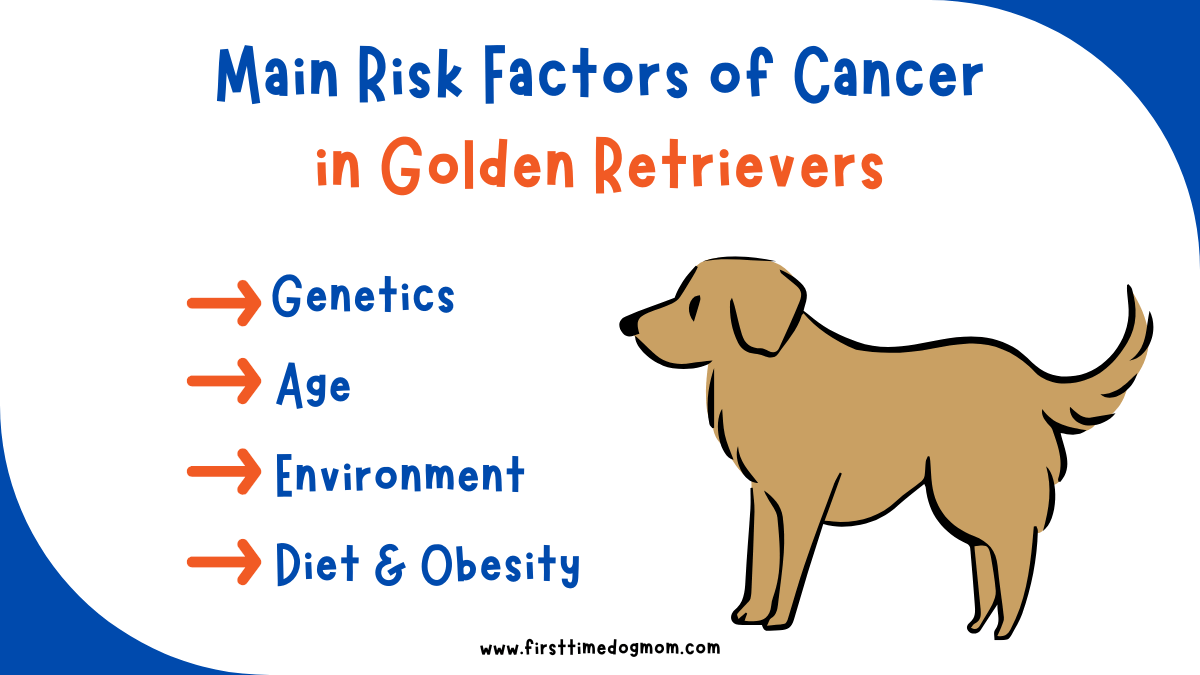
These risk factors often overlap in Golden Retrievers, which helps explain why cancer is so common in the breed.
1. Genetics
Some Golden Retrievers inherit genes that increase their risk of cancer. Purebred dogs have a smaller gene pool, so harmful genes can be passed down more easily.
Having a genetic risk doesn’t guarantee cancer, but it does make this breed more vulnerable.
2. Breeding Practices
Selective breeding, which helped make Golden Retrievers popular, can concentrate cancer‑linked genes.
Research has shown that the rate of cancer in Golden Retrievers in North America is higher than in European lines.
In one large breed health review, about 61–62% of U.S.‑bred Golden Retrievers died from cancer, while European‑bred Goldens had a lower rate of around 38–39%.
This difference may reflect genetic and breeding differences between the two populations. You can read more about these findings in an article from Kinship.
3. Age
Cancer risk increases as dogs age. In Golden Retrievers, it starts to increase around age six and peaks between 10 and 12 years. A weaker immune system makes it easier for abnormal cells to grow.
4. Spaying and Neutering Timing
The age at which a Golden is spayed or neutered can affect cancer risk. Early spaying or neutering may increase certain cancers, while intact dogs face risks like mammary or testicular cancer.
Because timing matters, it’s worth reviewing guidance on when to spay a Golden Retriever and discussing the best option with your veterinarian.
5. Lifestyle and Environment
Diet, obesity, and exposure to toxins all play a role. Processed foods, lawn chemicals, secondhand smoke, and prolonged sun exposure can increase risk.
Maintaining a healthy diet and reducing exposure to harmful substances can help, though it won’t change genetic risk.
Most Common Cancers In Golden Retrievers
Golden Retrievers are most often affected by four types of cancer. Understanding them can help owners spot early warning signs and seek treatment quickly.
1. Hemangiosarcoma
This is a fast-growing cancer of the blood vessels. It often develops in the spleen, liver, or heart. Hemangiosarcoma can suddenly rupture and cause serious internal bleeding. Middle-aged and older Goldens are most commonly affected.
For a clear explanation and expert answers about hemangiosarcoma, check out this video from the Morris Animal Foundation.
2. Lymphoma
Lymphoma affects the lymphatic system, including lymph nodes, spleen, and bone marrow. There are many types, but multicentric lymphoma, which enlarges lymph nodes throughout the body, is the most common in Goldens. Chemotherapy is often effective, and dogs usually tolerate it well.
3. Mast Cell Tumors
Mast cell tumors (MCTs) are skin cancers that can be slow-growing or aggressive. They often appear as small lumps or bumps on the skin. Low-grade tumors can often be removed with surgery, while high-grade tumors may spread and require additional treatment.
4. Osteosarcoma
Osteosarcoma is a cancer of the bone. It typically affects the limbs and can spread quickly to other areas, especially the lungs. Early signs include swelling, limping, or bone pain. Treatment may involve surgery, chemotherapy, or amputation in severe cases.
Even though cancer is common in Golden Retrievers, early detection can make a big difference. Regular vet checkups and monitoring your dog for unusual lumps, swelling, or changes in behaviour can help catch these cancers early.
Early Warning Signs Of Cancer In Golden Retrievers
Cancer can be difficult to detect early, and some types, like hemangiosarcoma, often show no symptoms until they are severe. Still, some signs may indicate a problem.
Watch for changes such as:
- Lumps or bumps that persist or grow
- Sores that don’t heal
- Unexplained weight loss
- Changes in appetite or water intake
- Bleeding or unusual discharge
- Difficulty eating, moving, or breathing
- Lethargy or loss of stamina
Even small changes in behaviour, energy, or sleep can be a warning sign. Since some cancers show no early symptoms, regular vet checkups and monthly body checks are important. Activity trackers can help spot changes sooner.
Tips To Reduce Cancer Risk In Golden Retrievers

While genetics can’t be changed, there are steps you can take to lower your Golden Retriever’s overall risk of cancer:
1. Choose a Responsible Breeder
Select a breeder who screens for cancer in their breeding lines. Responsible breeders perform health testing and avoid breeding dogs with a history of cancer.