

Some of the links in this post are affiliate links. This means if you click on the link & purchase the item, I will receive an affiliate commission at no extra cost to you. All opinions remain my own.
Hot spots are a common skin issue in Golden Retrievers and can appear suddenly and spread fast. These red, irritated patches are often painful and itchy, which can be stressful to see as an owner.
The good news is that many mild hot spots can be managed at home when caught early. This guide explains what causes hot spots and what you can do to treat and prevent them.
Table of Contents
Quick Answer: What To Do If Your Golden Retriever Has A Hot Spot
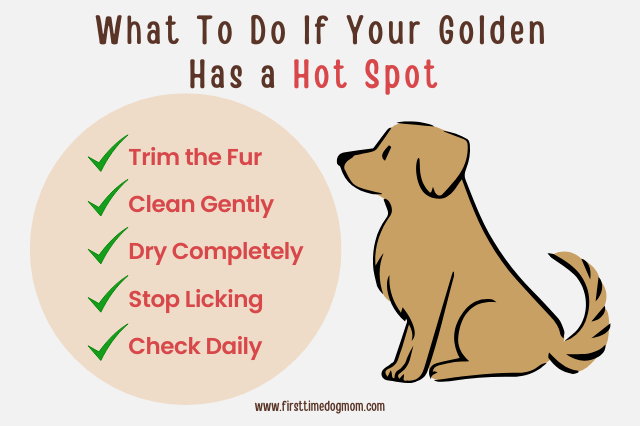
If you notice a red, wet, or irritated patch on your Golden Retriever, act quickly. Hot spots can spread fast, especially if your dog keeps licking or scratching.
What To Do Immediately:
- Trim the fur around the hot spot so air can reach the skin.
- Clean the area gently with something safe you have at home:
- Warm water, or
- Homemade saline ( 1⁄2 teaspoon of salt in 1 cup of boiled water, cooled)
- Dog-safe antiseptic spray (labelled for pets)
- Pat the skin completely dry; moisture makes hot spots worse.
- Stop licking and scratching – a cone or protective clothing may be needed.
- Check the spot daily for improvement.
You should see some improvement in 24–48 hours. If the hot spot worsens or doesn’t improve, consult your vet.
Do Not Use:
- Hydrogen peroxide or rubbing alcohol: Can damage healthy skin, delay healing, and increase irritation.
- Human creams or ointments: Many contain ingredients that are unsafe if licked or absorbed.
- Essential oils or harsh soaps: Can irritate or burn sensitive skin.
These products can increase irritation, slow healing, and make the hot spot worse. When in doubt, only use products specifically labelled safe for dogs.
Now that you know what to do immediately, let’s understand what hot spots are and why Golden Retrievers are particularly prone to them.
What Are Hot Spots On Golden Retrievers?
Hot spots are inflamed, red, and often wet patches of skin that appear suddenly. They usually start when your dog scratches, bites, or licks a small irritation. This licking can trap moisture and bacteria, making the skin sore and painful.
Golden Retrievers are more prone to hot spots because of their thick coat and sensitive skin. Even a minor itch or scratch can quickly turn into a hot spot if it is not treated early.
Hot spots are not just a skin problem. They are a sign that something is irritating your dog’s skin and needs attention right away.
Common Hot Spot Locations
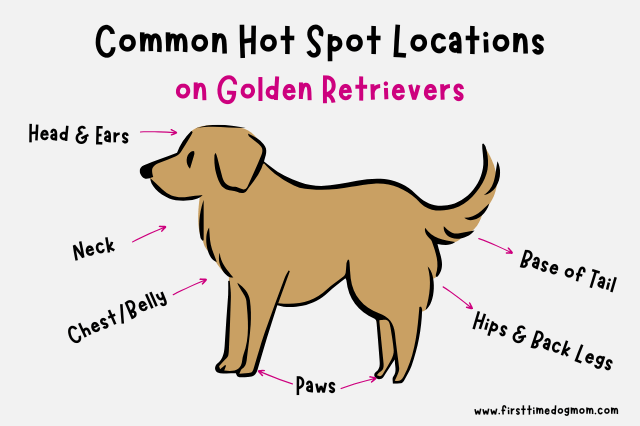
Knowing where hot spots usually appear can help you catch them early and prevent them from getting worse. Hot spots tend to develop in areas where moisture, friction, or scratching is common.
- Ears: Especially the back or inside folds, which trap moisture.
- Neck (Under the Collar): Friction and trapped moisture can irritate the skin.
- Hips and Back Legs: Areas dogs often scratch or bite.
- Chest and Belly: Thick fur and trapped moisture make these spots prone.
- Paws and Between Toes: Wet or muddy areas can develop hot spots.
- Base of the Tail: Moisture from swimming, baths, or anal gland issues can trigger licking and irritation, leading to hot spots.
Regularly checking these areas during grooming or after walks and swimming can help you spot hot spots early, keeping your Golden more comfortable.
Why Golden Retrievers Get Hot Spots
Golden Retrievers are prone to hot spots for a few reasons that are specific to the breed:
- Thick double coat: Their dense fur traps heat and moisture, creating the perfect environment for skin irritation.
- Sensitive skin: Goldens often have more delicate skin that reacts easily to minor scratches, bug bites, or allergies.
- Allergies are common: Many Goldens react to pollen, dust, or certain foods. Chicken is a common food allergy in Golden Retrievers and can cause itching, licking, and skin irritation that leads to hot spots.
- Water-loving dogs: Golden Retrievers often swim or play in water, and if their coat stays wet, it increases the risk of hot spots.
- Prone to licking and scratching: Goldens can obsessively lick or scratch an irritated spot, which makes it worse and spreads bacteria.
Knowing why your Golden is prone to hot spots helps you treat and prevent them effectively.
Home Remedies For Mild Hot Spots
For mild hot spots, you can often manage them at home if you act quickly. Here’s what to do:
- Trim the Fur Around the Spot
- Carefully remove hair around the affected area with scissors or clippers.
- This allows air to reach the skin and reduces moisture buildup.
- Clean the Area
- Rinse with warm water or a homemade saline solution (½ teaspoon salt in 1 cup boiled water, cooled).
- Gently pat the skin dry. Avoid rubbing.
- Apply a Dog-Safe Antiseptic or Soothing Treatment
- Dog-safe antiseptic spray labelled for pets.
- Coconut oil: Apply a thin layer to the hot spot. It can help moisturize and reduce bacterial growth.
- 100% pure aloe vera gel: Apply a small amount directly to the skin for cooling relief. Make sure it’s pure and free from additives.
- Diluted apple cider vinegar: Mix equal parts vinegar and water. Apply gently with a cloth or spray bottle. Avoid open wounds, as vinegar can sting.
- Optional herbal rinse: Chamomile or calendula tea (cooled) can be applied gently to soothe irritation. Use only if approved by your vet.
- Prevent Licking and Scratching
- Use an Elizabethan collar (cone) or protective clothing if needed.
- Keep your dog’s nails trimmed to prevent worsening the hot spot.
- Stopping your dog from aggravating the spot is key to healing.
- Monitor the Hot Spot Daily
- Check for changes in redness, swelling, or discharge.
- Mild hot spots often improve within 24–48 hours.
When To See A Vet
Most mild hot spots can improve with home care, but some situations require professional attention. Contact your veterinarian if you notice any of the following:
- Rapidly Spreading Hot Spots
- If the affected area grows quickly or new spots appear, your dog may need stronger treatment.
- Severe Redness, Swelling, or Discharge
- Pus, bleeding, or a foul smell can indicate an infection that requires prescription medication.
- Persistent or Non-Healing Hot Spots
- If there’s no improvement within 48 hours, a vet visit is necessary.
- Pain, Lethargy, or Fever
- Hot spots accompanied by behavioural changes or illness are a sign of a more serious problem.
- Underlying Allergies or Skin Conditions
- If your dog gets hot spots repeatedly, a vet can help identify allergies, parasites, or other skin issues.
Tip: Even mild hot spots can worsen if your dog keeps scratching or licking. When in doubt, it’s safer to call your vet.
How To Prevent Hot Spots In Golden Retrievers
Preventing hot spots is easier than treating them. Golden Retrievers are prone to skin irritation, so a few simple habits can keep your dog’s skin healthy:
- Regular Grooming
- Brush your Golden’s coat at least 2–3 times a week.
- Brushing removes loose fur, prevents matting, and improves air circulation. The right brush for a Golden’s thick coat makes grooming easier and more comfortable.
- Keep the Coat Dry
- After swimming, baths, or rainy walks, dry your dog thoroughly. A dog dryer significantly speeds up drying time.
- Pay special attention to thick areas like behind the ears, under the legs, and around the tail.
- Remove Collars When Not in Use
- Hot spots often develop under collars because trapped moisture and friction irritate the skin.
- Take collars off during rest or playtime at home whenever possible.
- Check for Fleas and Parasites
- Fleas, ticks, and mites can irritate the skin and trigger hot spots.
- Use vet-approved prevention year-round.
- Monitor for Early Signs of Irritation
- Look for redness, scratching, licking, or chewing.
- Treat small irritations promptly to prevent them from becoming hot spots.
- Manage Allergies
- If your Golden has food or environmental allergies, work with your vet to reduce triggers.
- Limiting allergens can prevent chronic scratching that leads to hot spots.
- Keep Nails Trimmed
- Long nails can scratch the skin during normal activity.
- Regular trimming helps prevent accidental injuries that may develop into hot spots.
- Maintain a Healthy Bathing Routine
- Bathe your Golden with a mild, dog-safe shampoo when necessary.
- Avoid over-bathing, which can dry out skin and increase irritation.
FAQs About Hot Spots In Golden Retrievers
If you’re new to hot spots, you probably have questions about how to treat them safely and prevent them. Here are the most common concerns for Golden Retriever owners:
1. Can I use Gold Bond on my Golden’s hot spot?
Only plain, unscented Gold Bond Medicated Powder is generally safe for dry hot spots. Apply it sparingly, avoid scented powders or creams with menthol, and do not use it on wet or oozing spots. When in doubt, consult your vet.
2. What should I do if my dog keeps licking the hot spot?
Use an Elizabethan collar (cone) or protective clothing to prevent licking. Short-term distractions, like toys or puzzle feeders, can also help.
3. How long does a hot spot take to heal?
Mild hot spots usually improve within 24–48 hours with proper home care. Severe or infected spots may take 1–2 weeks and may require vet treatment.
4. Are there products I should avoid on hot spots?
Avoid hydrogen peroxide, rubbing alcohol, harsh soaps, human creams, and scented powders with menthol or tea tree oil. These can worsen irritation or be toxic. For safe cleaning tips, see the VCA Animal Hospitals guide on open wound care.
5. How can I prevent hot spots in my Golden Retriever?
Regular grooming, keeping the coat dry, removing collars when not in use, and managing allergies can all reduce the risk. Daily checks for scratching or redness help catch issues early.
Conclusion
Hot spots in Golden Retrievers can appear quickly, but early action makes a big difference. By paying attention to your dog and taking simple steps, many mild hot spots can be managed at home.
Key Points to Remember:
- Keep your Golden’s coat clean and dry, especially after swimming or baths.
- Remove collars when possible to reduce friction and moisture.
- Watch for signs of irritation, redness, or itching.
- Use only vet-approved or dog-safe treatments; avoid human creams, harsh soaps, or essential oils.
- Stop your dog from licking or scratching the hot spot.
- Manage allergies, including common food triggers like chicken.
- Consult your veterinarian if the hot spot spreads, looks infected, or doesn’t improve within a couple of days.
Taking these steps can help your Golden stay comfortable and less prone to hot spots.
If you’re new to owning a Golden Retriever, learning the basics of grooming, health, and daily care can make a big difference. My Beginner’s Guide to Golden Retrievers covers everything you need to know.
Have a question or experience with hot spots in your Golden? Share it in the comments below. I’d love to hear from you!

Hi, I’m Jenny, the owner and content creator of First Time Dog Mom. As the proud owner of Ellie, my senior Golden Retriever, I share the insights and tips I’ve learned through my own experiences as a dog mom. With a lifelong love of animals, I hope to be a helpful resource for others navigating the joys and challenges of pet parenthood.