
Some of the links in this post are affiliate links. This means if you click on the link & purchase the item, I will receive an affiliate commission at no extra cost to you. All opinions remain my own.
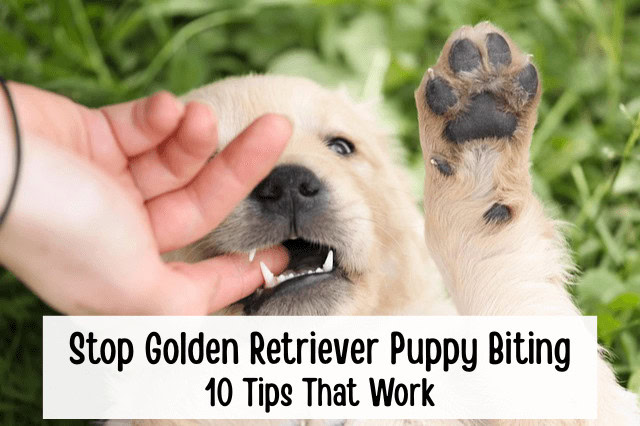
Golden Retriever puppies bite – a lot. While this behaviour is normal, it can be painful and frustrating for new owners. The good news is that puppy biting can be stopped with the right approach.
Below are 10 proven tips to stop Golden Retriever puppy biting, starting with what works immediately.
Table of Contents
10 Tips To Stop Golden Retriever Puppy Biting
These tips focus on teaching your puppy what’s appropriate to bite while keeping playtime calm and controlled.
1. Yelp and End Play Immediately
If your puppy bites too hard, let out a quick “ouch” or yelp and stop playing right away. Walking away teaches your puppy that biting ends the fun, which helps reduce it over time.
2. Redirect Biting to a Chew Toy
When your puppy goes for your hands, calmly offer a chew toy instead. This helps your puppy learn what is okay to bite and protects your skin at the same time.
3. Teach Simple Commands
Using basic puppy commands like “sit,” “leave it,” or “down” can interrupt biting before it escalates. Commands shift your puppy’s focus and encourage calmer behaviour.
4. Give Your Puppy Enough Exercise and Mental Stimulation
A bored puppy is more likely to nip and bite. Short walks, sniffing time, and structured play are great ways to provide mental stimulation and burn excess energy.
5. Use a Taste Deterrent if Needed
Bitter sprays can discourage puppies from biting hands, clothing, or furniture. Apply it to areas your puppy targets so biting becomes less rewarding.
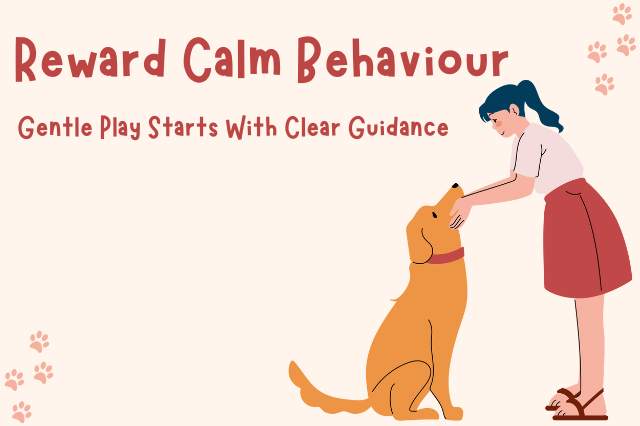
6. Reward Calm, Gentle Behaviour
Any time your puppy stops biting or chooses a toy instead, reward that behaviour with praise or a treat. Puppies repeat behaviours that lead to positive attention.
7. Stay Consistent and Patient
Puppy biting doesn’t stop overnight. Staying calm and responding the same way every time helps your puppy understand expectations faster.
8. Choose Non-Contact Games
Games like fetch or gentle tug keep teeth away from your hands. These games allow your puppy to play and burn energy without encouraging nipping.
9. Socialize With Other Friendly Dogs
Safe play with other dogs teaches puppies bite limits naturally. Other dogs are often better at correcting rough play than humans are.
10. Stay Calm and Avoid Punishment
Yelling or physical punishment can confuse or excite your puppy and make biting worse. Calm, controlled responses help your puppy learn faster and build trust.
Important Note: Puppy biting is a normal phase and won’t stop overnight. Stay consistent with these tips, and most Golden Retriever puppies naturally improve as they mature.
Why Golden Retriever Puppies Bite
Knowing why your puppy bites makes it easier to handle and teach them gentle play.
- Golden Retrievers are mouthy by nature. They were bred to carry objects gently, so using their mouths comes naturally to them.
- Biting is part of normal puppy play. Puppies nip during play because it’s how they interact, learn boundaries, and practice bite control.
- Teething causes discomfort. As new teeth come in, puppies bite and chew to relieve sore gums.
- Puppies explore new things with their mouths. Hands, clothing, and movement are especially exciting, which makes them more likely to grab and nip.
- This behaviour is rarely aggression. Most puppy biting is playful and developmental, not a sign of a serious behaviour problem.
Understanding these reasons helps you stay patient and respond the right way when biting happens.
Common Mistakes That Make Puppy Biting Worse
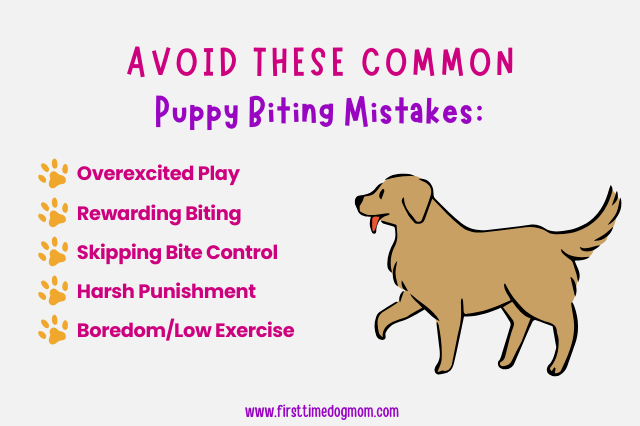
Even well-meaning owners can accidentally encourage biting. Avoid these common mistakes to help your puppy learn faster.
- Overexcited Play: Rough play, chasing, or waving hands can overstimulate puppies. Children often get nipped because puppies respond to their high energy.
- Rewarding Biting: Talking, pushing, or yelling can feel like attention, encouraging more nipping.
- Skipping Bite Control: Puppies learn bite inhibition from littermates. At home, gently letting out a yelp or stopping play when your puppy bites too hard teaches them to soften their bite.
- Harsh Punishment: Yelling, hitting, or squirting water can confuse puppies and make biting worse. Calm, consistent responses work best.
- Boredom or Low Exercise: Puppies with extra energy are more likely to nip. Mental and physical stimulation reduces biting naturally.
Avoiding these mistakes helps your puppy learn gentle play and keeps everyone, especially children, safe.
When Puppy Biting Could Be Aggression
Most Golden Retriever puppy biting is completely normal, but in rare cases, it can be a sign that something isn’t quite right.
Playful vs. concerning behaviour: Normal puppy biting usually happens during play and stops when play stops. Aggressive behaviour tends to feel more intense and doesn’t improve with redirection.
Why it can happen: Puppies taken from their litter too early, poorly bred, under-socialized, or exposed to negative experiences may be more likely to show aggressive behaviour.
Signs to pay attention to:
- Growling or snapping without playful body language
- A stiff or frozen posture
- Repeated biting that breaks skin
- Showing teeth along with a hard, focused stare
If you notice these signs, reach out to a professional dog trainer or behaviourist early, and if a bite breaks the skin, follow proper first-aid steps to clean and treat it.
FAQs About Golden Retriever Puppy Biting
These are some of the most common questions new owners have when dealing with puppy biting.
1. How long does Golden Retriever puppy biting last?
Golden Retriever puppies usually outgrow biting between 4 and 6 months. Consistent training and redirecting to toys can help reduce it sooner.
2. Is it normal for Golden Retriever puppies to bite so much?
Yes. Golden Retriever puppies are naturally mouthy, playful, and energetic. Biting at this age is normal and part of learning, not aggression.
3. How do I stop my Golden Retriever puppy from biting my hands?
Redirect your puppy to chew toys, stop play when nipping happens, and reward calm behaviour. Avoid rough hand play to teach boundaries. For safe, durable options, see our guide to the best teething toys for puppies.
4. Will my puppy stop biting on their own?
Some improvement happens naturally with age, but puppies need guidance. Teaching boundaries early prevents biting from becoming a long-term habit.
Conclusion
Teaching a Golden Retriever puppy not to bite takes patience and consistency, but it’s completely achievable. Small, steady steps like redirecting nips to toys, rewarding gentle behaviour, and giving plenty of exercise, help your puppy learn how to play safely.
Key points to remember:
- Puppies need guidance to develop bite control.
- Positive reinforcement works better than punishment.
- Mental and physical stimulation reduces boredom-related biting.
Stick with these strategies, and your puppy will grow into a calm, well-behaved dog while keeping playtime safe and enjoyable for everyone.
Have you tried any of these tips with your Golden Retriever puppy? Share your experiences or questions in the comments below. I’d love to hear what worked for you.

Hi, I’m Jenny, the owner and content creator of First Time Dog Mom. As the proud owner of Ellie, my senior Golden Retriever, I share the insights and tips I’ve learned through my own experiences as a dog mom. With a lifelong love of animals, I hope to be a helpful resource for others navigating the joys and challenges of pet parenthood.
Hi Jenny,
We have a six month old female golden who has shown aggressive tendencies like snapping out of frustration as she’s quite headstrong. She also shows all the teeth and scrunches up the nose before air biting at us or biting us sometimes for no reason. She has also barked aggressively at dogs outside our gate who were being walked when their owners stopped to chat. She has a history of biting and dragging out of our clothes which she has grown out of pretty much. We are not sure what to make of the showing all of her teeth when biting or snapping at us and are considering rehoming. Is this something that can change with maturity or abnormal? We have been told by the vet that she shouldn’t be doing it and are not sure when you read different things online. What is your opinion? We also have a nine year old daughter and a cat.
Hi Trina,
Thanks for sharing your story with us.
As I am unaware of the history of your Golden Retriever puppy, such as, did you get her from a breeder? Was she a rescue? How old was she when you got her? Without knowing these details, I can’t really offer too much help.
However, I can tell you that Golden Retrievers at this age are very “wild” for lack of a better word. It’s an age when they go through their adolescent stage as well as teething, so it is a very trying time for both you and your pup!
I can tell you from experience that my female Golden Retriever Ellie, was a terror at times! She would aggressively bite at us and jump at us, there was a time when my husband had to lock himself in the bedroom just to get away from her because she was so wild.
We just stuck with the training, being patient, and stopped playing when she acted this way. She was overtired and needed a time out.
I truly believe that if you keep up with her training, give her plenty of exercise and mental stimulation, and follow a consistent daily routine, your pup will know what is expected of her. I say this often, dogs feel safe and secure when they have a routine, and it makes them calmer. Your dog will know that feeding time, walking, playing, and sleeping is the same time every day, and it will make her feel at ease.
In my experience, being consistent with everything that I mentioned (training, exercise, etc.), has rewarded us with the most amazing companion! I can tell you that it does get better with age and maturity.
However, I would also suggest that you work with a trainer that has experience with dog behaviour. As your puppy is only 6 months old, in my opinion, I would not give up on her just yet. Golden Retrievers take a while to fully mature, but you will notice a big difference at the one year mark, then again at the two year mark.
I hope this has helped you somewhat, and I wish you all the best! Hang in there, it really does get better!!
Take care,
Jenny.
Thanks for this useful information on training golden retrievers to stop biting.
I think now that you have explained exactly why they do bite, I have a much greater understanding of the issue and will be able to deal with it in a much better way.
Your advice about not getting your pup overly excited, or walking away when they do, is definitely something that I wouldn’t have thought of.
Overall I take your advice that shouting, or getting cross with your puppy will achieve nothing.
Hi Geoff,
I am glad this article has given you a greater understanding of how to deal with your puppy’s biting, and what steps to take and what not to do. The key is to find what works for your puppy and be consistent, and above all be patient.
In time your puppy will grow out of this behaviour.
Thanks for taking the time to comment.
Jenny.