

Some of the links in this post are affiliate links. This means if you click on the link & purchase the item, I will receive an affiliate commission at no extra cost to you. All opinions remain my own.
If you’re wondering what a healthy weight for a Golden Retriever is, you’re not alone.
Most adult male Golden Retrievers weigh between 65 and 75 pounds, while females typically weigh 55–65 pounds. However, the ideal weight can vary slightly depending on the type of Golden Retriever, genetics, and activity level.
In this guide, you’ll learn the healthy weight ranges for American, Canadian, and English Golden Retrievers, plus how to tell if your dog is at a healthy weight.
Table of Contents
Quick Answer: Healthy Weight For a Golden Retriever
- Adult Male Golden Retriever: 65–75 lbs
- Adult Female Golden Retriever: 55–65 lbs
These ranges come from American breed standards, but the number on the scale is only part of the picture.
A healthy Golden Retriever should also have:
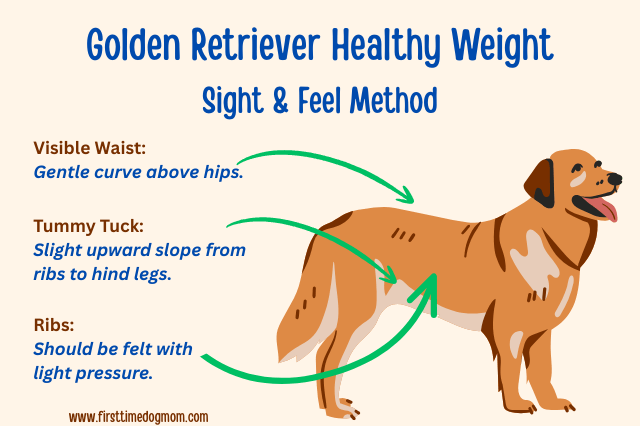
- A visible waist when viewed from above
- A slight tummy tuck from the side
- Ribs that can be felt with light pressure but are not visible
If your dog falls slightly outside this range but still has a healthy body shape, they may still be at an ideal weight.
Golden Retriever Healthy Weight Chart
| Type of Golden Retriever | Male Weight | Female Weight |
| American | 65-75 lbs | 55-65 lbs |
| Canadian | 65-75 lbs | 60-70 lbs |
| English | 65-75 lbs | 55-65 lbs |
English Golden Retrievers often appear heavier because they have a stockier, more muscular build, while American and Canadian Goldens are typically taller and leaner.
Wanna know how else they compare? Check out my article on English Retriever vs Golden Retriever.
Because of these natural differences, the number on the scale isn’t the only way to judge a healthy weight. Body shape and body condition are just as important.
Golden Retriever Puppy Weight Guide
If you have a Golden Retriever puppy, their weight will change quickly during the first year. The chart below shows the typical growth range for Golden Retriever puppies.
| Age | Average Weight |
| 8 Weeks | 10 lbs |
| 3 Months | 20-25 lbs |
| 4 Months | 30 lbs |
| 6 Months | 40-50 lbs |
| 8 Months | 50-60 lbs |
Puppies don’t always grow at the same rate, so small differences in weight are completely normal.
Most Golden Retrievers reach their full height between 9 and 12 months, but they may continue filling out and gaining muscle until around 18 months of age.
How to Tell if Your Golden Retriever Is at a Healthy Weight
Weight charts provide helpful guidelines, but every Golden Retriever is slightly different. The best way to tell if your dog is at a healthy weight is by checking their body condition.
Here are three simple things to look for:
1. You can feel their ribs easily
You should be able to feel your dog’s ribs with light pressure, but they shouldn’t be visibly sticking out.
2. They have a visible waist
When viewed from above, your Golden Retriever should have a gentle inward curve behind the ribs. (Like an hourglass figure).
3. Their belly is slightly tucked
From the side, the abdomen should slope upward from the ribcage toward the back legs rather than hanging straight down.
If your Golden Retriever has no waistline, a rounded belly, or ribs that are difficult to feel, they may be overweight.
Want to see it in action? Watch this short video showing the sight and feel method.
Factors That Affect a Golden Retriever’s Weight
A Golden Retriever’s healthy weight can vary depending on several factors. Even dogs within the same breed may look slightly different or weigh more or less while still being perfectly healthy.
Here are the main factors that influence weight:
- Age
Puppies grow quickly during their first year, while senior Goldens often become less active and may gain weight more easily. - Sex
Male Golden Retrievers are usually larger and heavier than females. - Genetics
Some Goldens naturally have a larger frame or more muscular build, depending on their bloodline. - Activity Level
Highly active dogs that swim, run, or exercise frequently may stay leaner than dogs with a more relaxed lifestyle. - Diet and Portion Size
Overfeeding, frequent treats, or calorie-dense foods can cause weight gain over time. - Spay or Neuter Status
After being spayed or neutered, some dogs experience a slower metabolism and may gain weight if their diet and exercise aren’t adjusted. Learn more about the best age to spay/neuter your Golden Retriever.
Health Risks of Being Underweight or Overweight
A healthy weight affects your Golden Retriever’s energy, comfort, and overall health. Dogs that are too thin or too heavy can run into problems.
Underweight
Being underweight can make your Golden less energetic and more prone to illness. Here’s what to watch for:
- Weak Immune System
Makes your dog more susceptible to infections and illnesses. - Muscle and Bone Loss
Can lead to fatigue, weakness, and mobility problems. - Skin and Coat Issues
Hair loss or dry skin may occur. - Slow Growth in Puppies
Underfed puppies may not reach their full size or developmental potential.
Overweight
Extra weight can put stress on your Golden’s body and lead to serious issues. Here’s what to keep an eye on:
- Joint Problems
Extra weight increases the risk of hip and elbow dysplasia and arthritis. - Heart and Respiratory Issues
Obesity can strain the heart and lungs, making exercise harder. - Diabetes and Metabolic Problems
Overweight dogs are more prone to insulin resistance and other metabolic conditions. - Shortened Lifespan
Carrying extra weight can reduce life expectancy and overall quality of life. - Higher Surgical and Anesthetic Risks
Excess weight can complicate procedures and recovery.
Tip: Even small changes in weight can make a big difference in your Golden Retriever’s health. Monitoring your dog’s body condition regularly is easier than treating weight-related problems later.
How to Maintain a Healthy Weight
Keeping your Golden Retriever at a healthy weight doesn’t have to be complicated. A few simple habits can make a big difference.
- Feed High-Quality Food
Choose nutritious dog food and avoid anything with fillers or artificial ingredients. - Watch Treats
Treats should only make up about 10% of your dog’s daily calories. Avoid table scraps and high-calorie snacks. - Control Portion Sizes
Feed the recommended amount for your dog’s weight and age. Dividing meals into two or three smaller portions can help. - Stay Active
Daily walks, fetch, swimming, or other play keep your dog lean and healthy. For senior dogs, some activities are easier on their joints. Check out my guide to the best exercises for senior Golden Retrievers. - Monitor Weight Regularly
Check your dog’s body condition weekly with the rib and waist check from earlier. - Make Gradual Changes
If your dog needs to lose or gain weight, adjust diet and exercise slowly. Quick changes can be stressful or unsafe. - Consult Your Vet
Your veterinarian can help you set a healthy weight goal and make a plan that’s right for your dog.
FAQs
Here are some quick answers to common questions about keeping your Golden Retriever at a healthy weight.
1. How can I tell if my Golden Retriever is overweight?
Look for a rounded belly, ribs that are hard to feel, and no visible waist when viewed from above. The sight and feel method is the easiest way to check.
2. How do I know if my Golden Retriever puppy is at a healthy weight?
Puppies grow quickly, so don’t stress about exact numbers. Track their weight against typical growth ranges and watch for steady, consistent growth. Your vet can help if you’re unsure.
3. How often should I check my Golden Retriever’s weight?
It’s best to monitor their body condition weekly or bi-weekly. Small changes over time are easier to manage than sudden weight problems.
4. Can spaying or neutering affect my dog’s weight?
Yes. Dogs that are spayed or neutered may burn fewer calories and could gain weight if diet and exercise aren’t adjusted.
Conclusion
A healthy weight is about more than just the number on the scale; it’s about your Golden Retriever’s body shape, energy, and overall health.
Here are the main takeaways:
- Adult males usually weigh 65–75 lbs, females 55–65 lbs.
- Puppies grow quickly, so focus on steady progress, not exact numbers.
- A visible waist, slight tummy tuck, and ribs you can feel are good signs.
- Balanced meals, regular exercise, and routine vet check-ins help keep your Golden healthy.
By following these simple steps, you can help your Golden stay happy, healthy, and active for years to come.
Is your Golden at a healthy weight? Share your experiences or questions in the comments. I’d love to hear from you!

Hi, I’m Jenny, the owner and content creator of First Time Dog Mom. As the proud owner of Ellie, my senior Golden Retriever, I share the insights and tips I’ve learned through my own experiences as a dog mom. With a lifelong love of animals, I hope to be a helpful resource for others navigating the joys and challenges of pet parenthood.
HAHA, I came just for the pic of the puppers! I love that picture of your retriever. Such a cute dog. I agree that you gotta keep your pooch at optimal weight through diet and exercise. It’s easy to forget that we get a lot more outside time than our animals and they need that time as much as we do. Mental health can affect the eating habits and weight of animals, just like humans.
Thanks for taking the time to comment. Yes, mental health can certainly affect a dog’s eating habits and weight gain or loss. An example of this is when a dog is stressed or feeling anxious, they will likely eat less food or not at all and therefore will lose weight, or it could have the opposite effect as well.
Having good mental health along with daily physical activity will help keep your dog at a healthy weight and live their best life.
Jenny.